New Mexico Birds: Gruiformes
Gruiformes means "crane-like." Images are organized alphabetically by taxon. Hover over a photo series to control the images.
Gruidae: Sandhill Crane (Antigone canadensis)
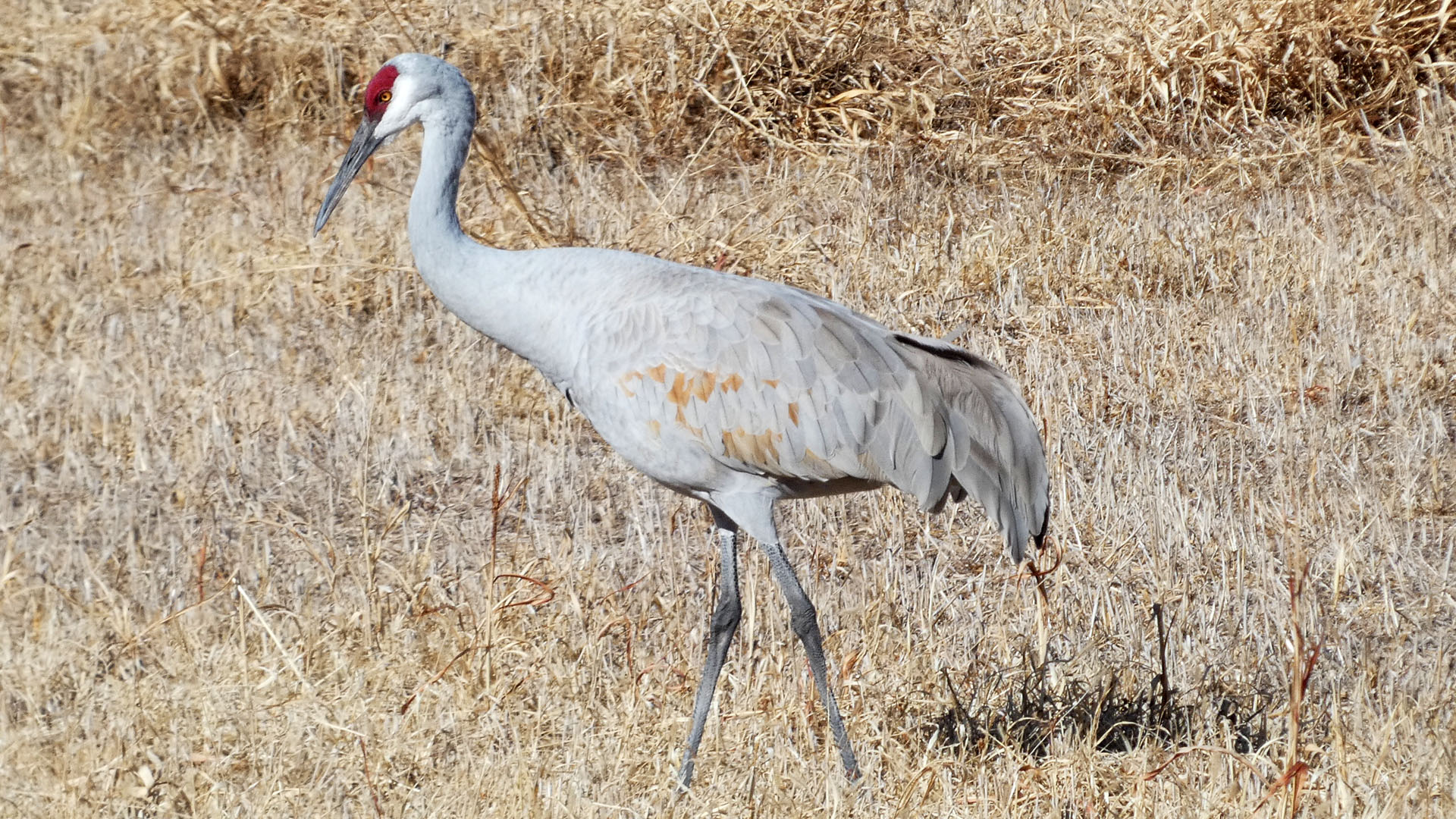
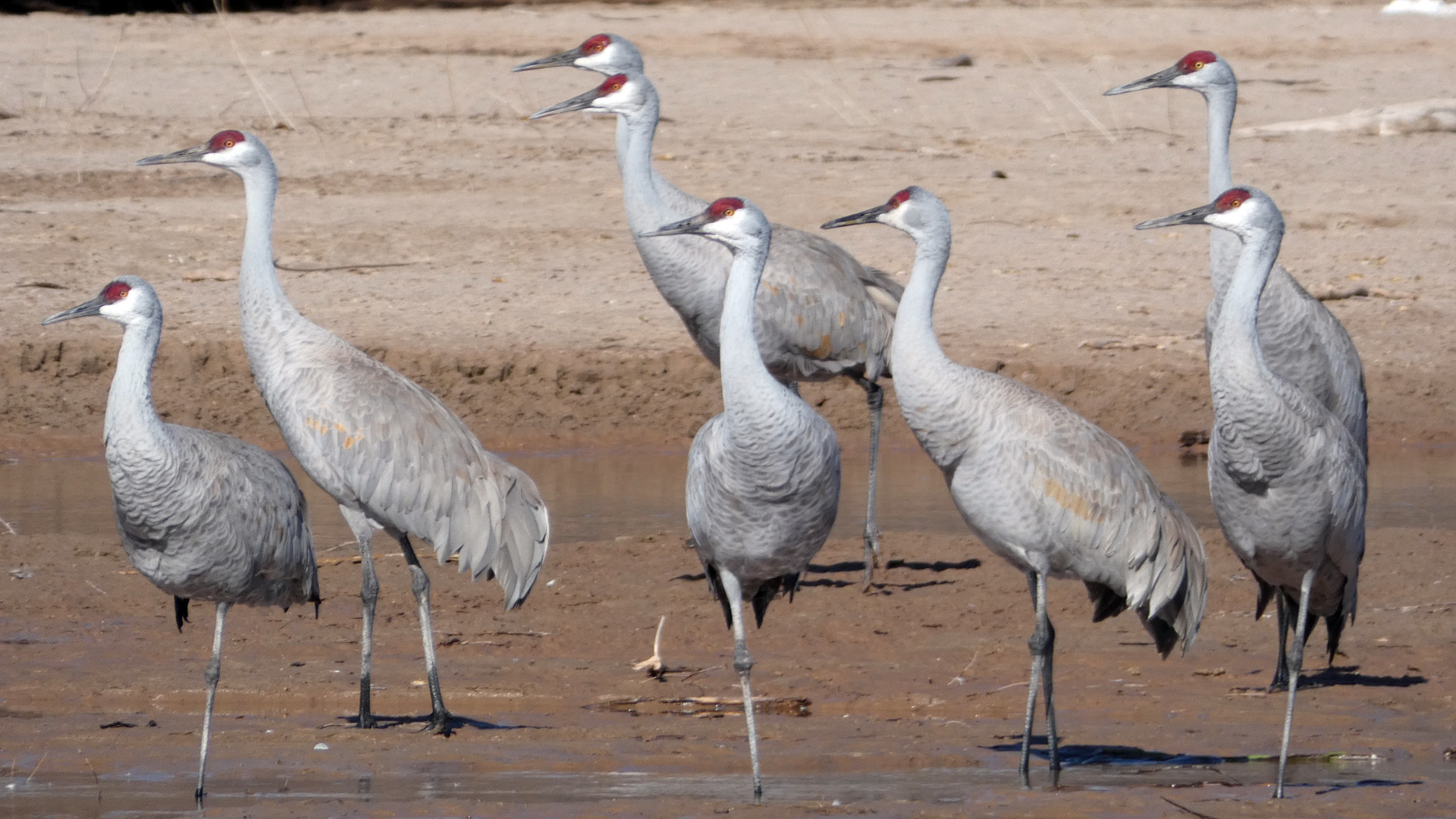
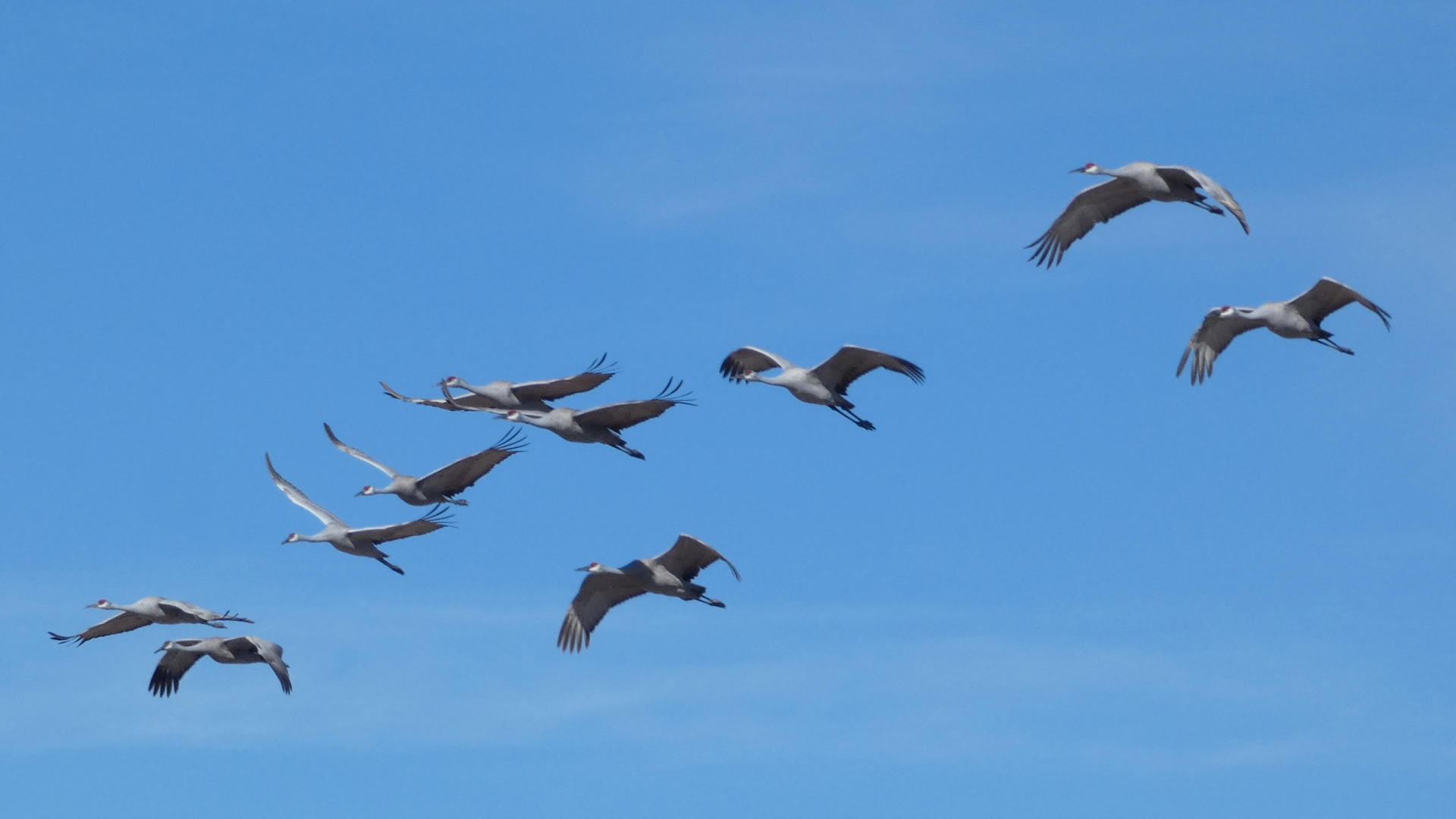
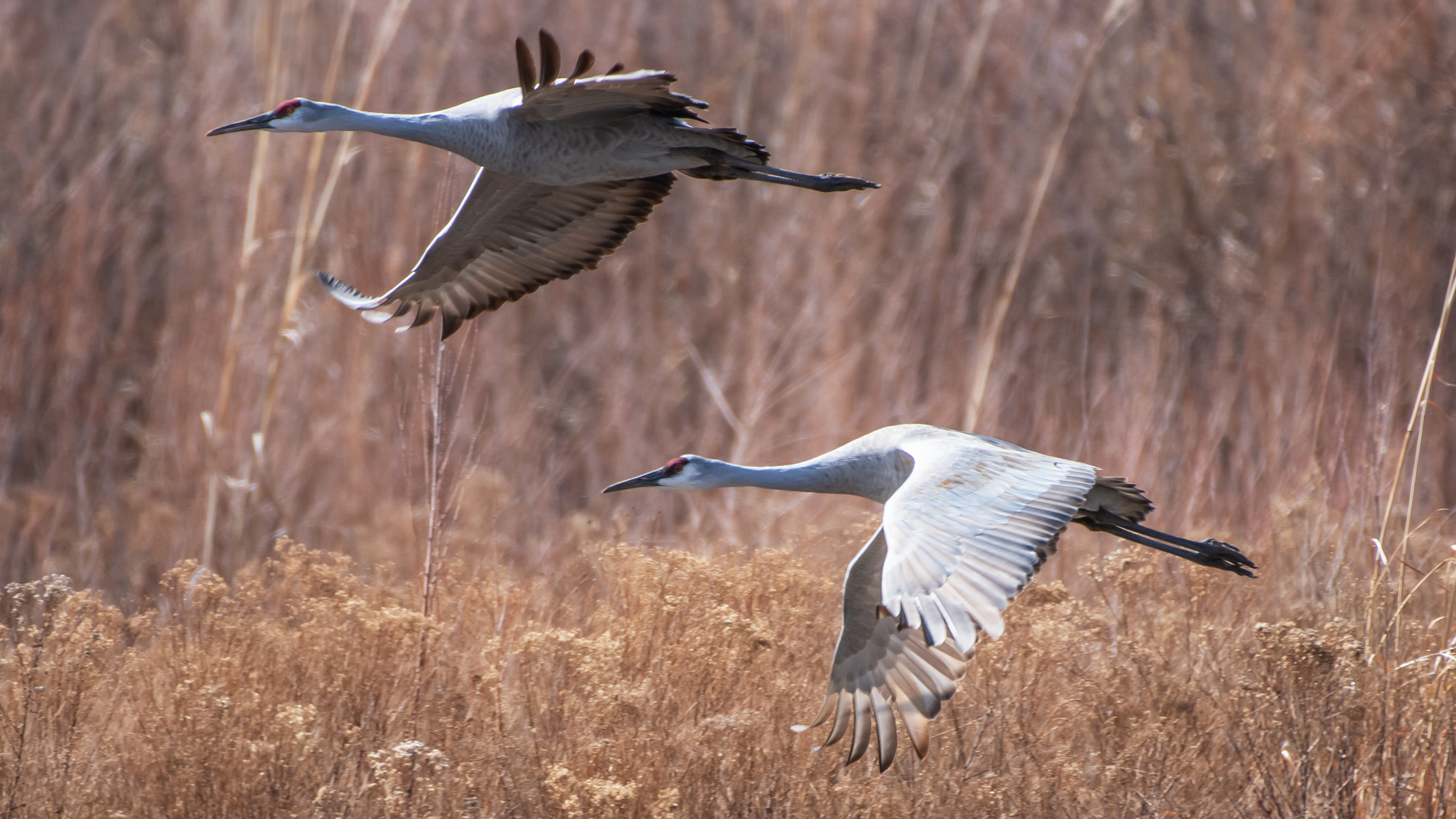
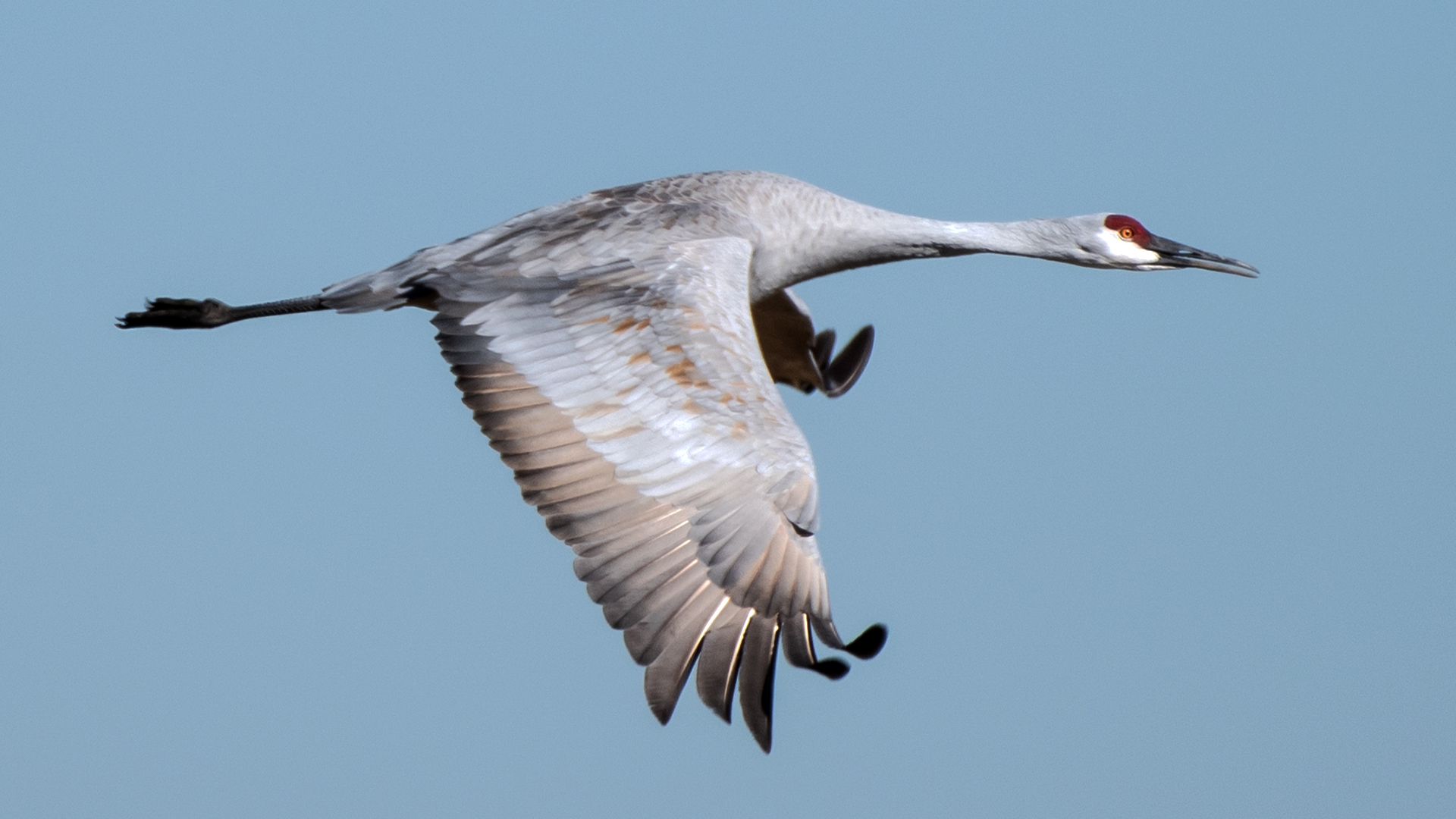
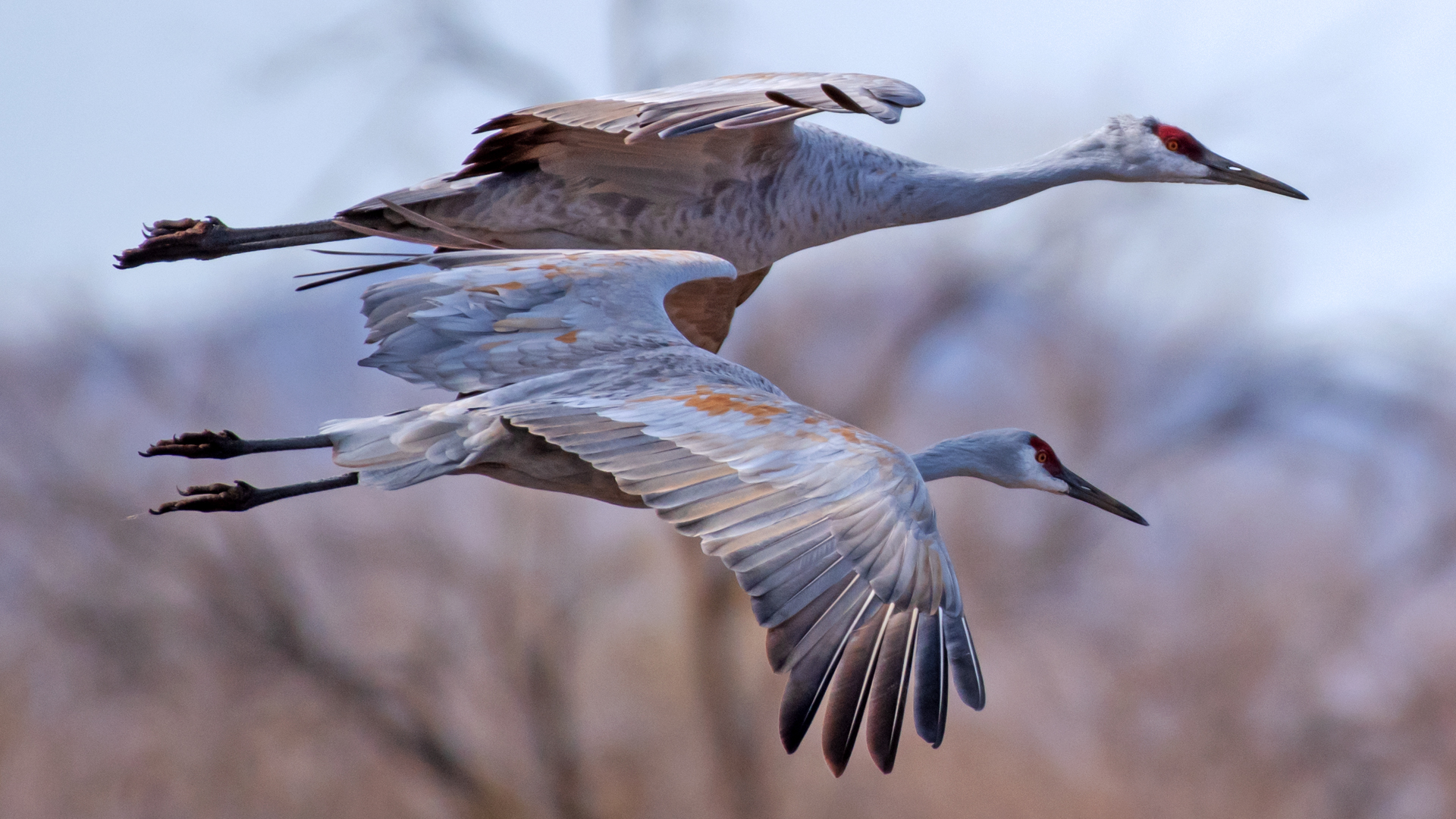
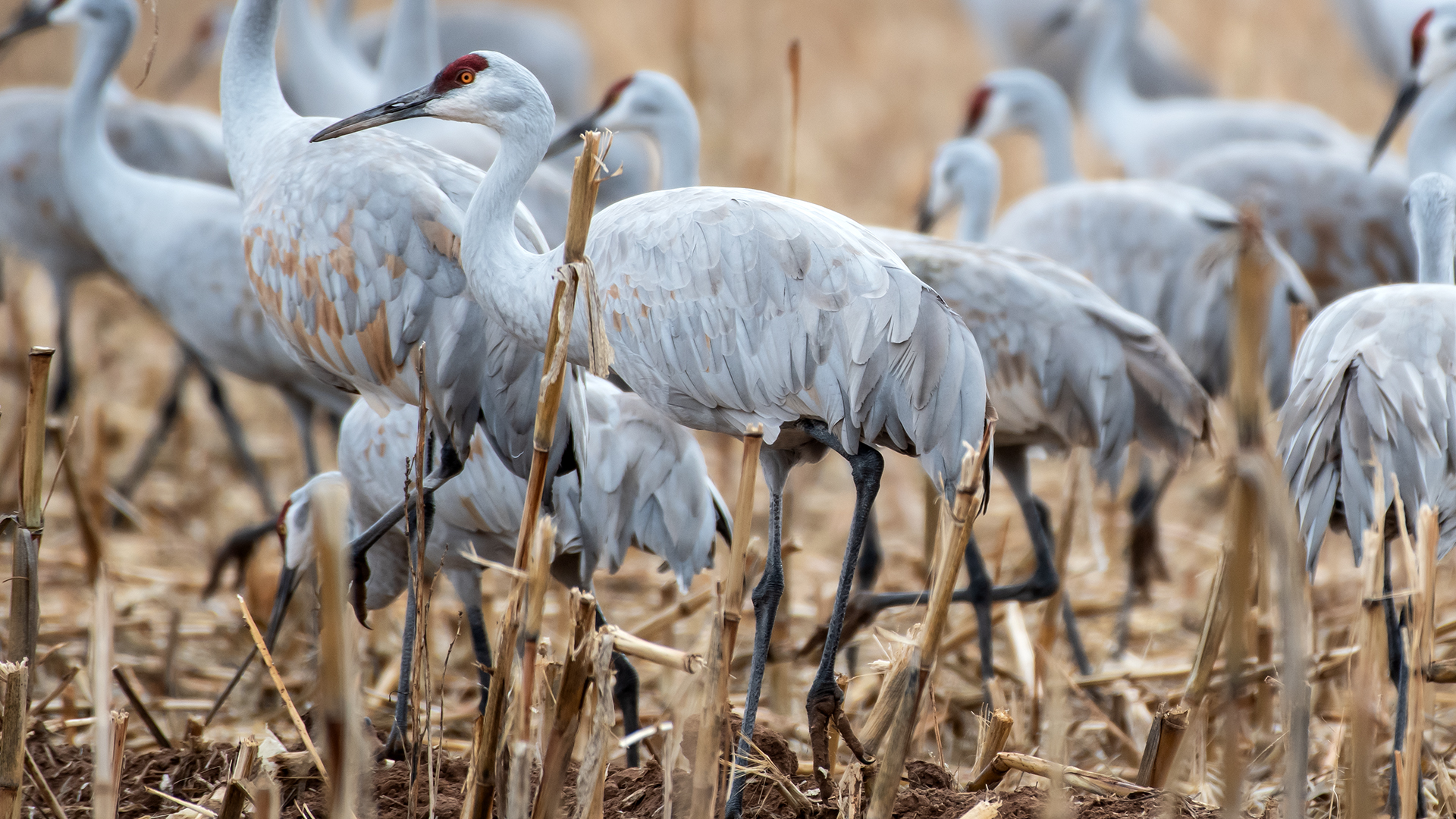
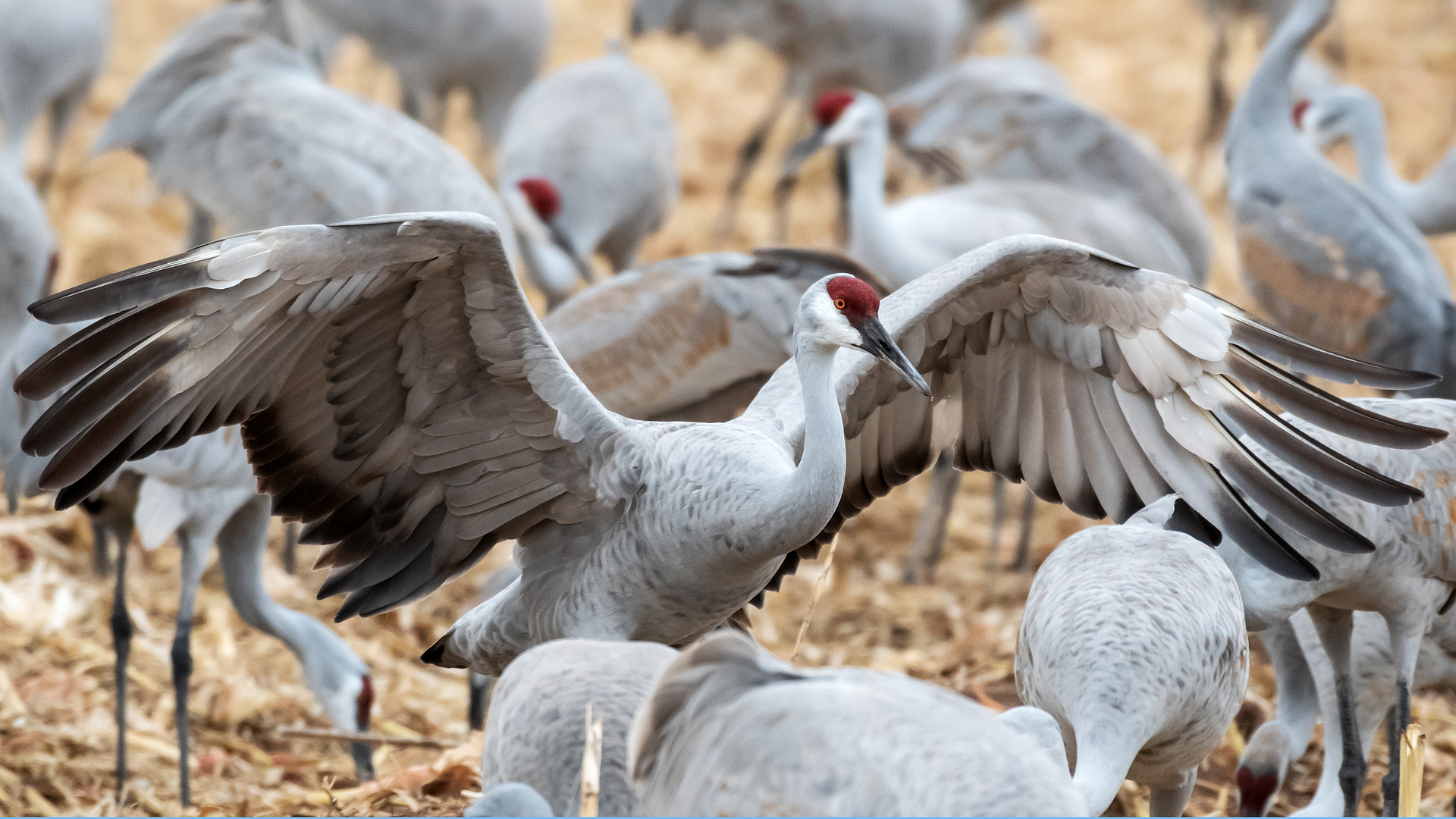
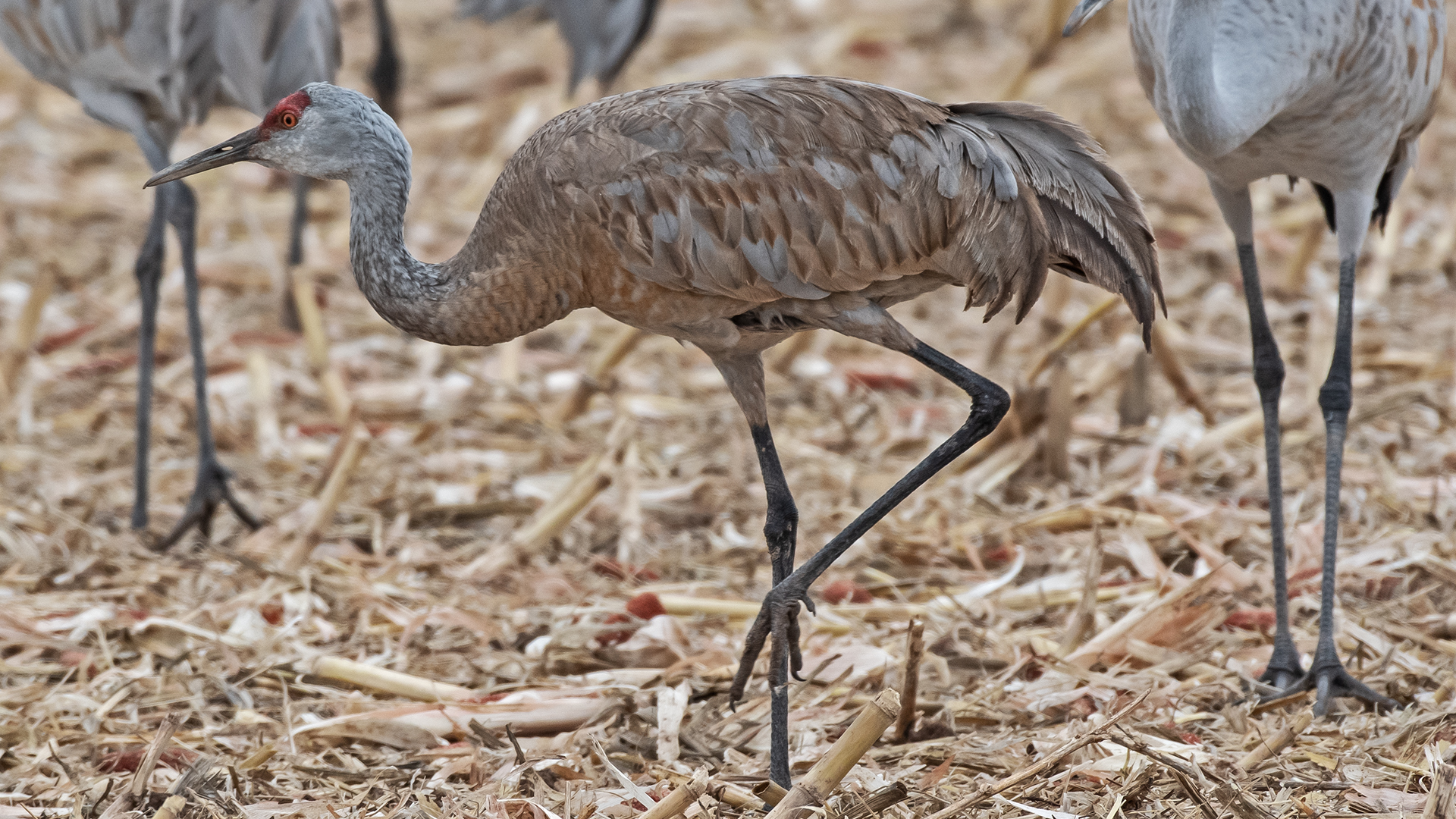


After just a bit of practice, it's easy to identify this species. For starters, they're big gray birds. On the ground, the "bustles" of drooping feathers at their rumps are obvious, even at a distance. In the air their head-out, feet-back flying style is also a giveaway. If the head lacks red, that's a juvenile. If you see a lot of brown plumage or hear a high-pitched reedy call among the adults' guttural calls, again that's a juvenile.
"LSGWC" stands for the Ladd S. Gordon Waterfowl Complex north of Socorro.
To see a video with cranes (at the Valle de Oro National Wildlife Preserve, before it got "improved"), click here.
Rallidae: American Coot (Fulica americana)
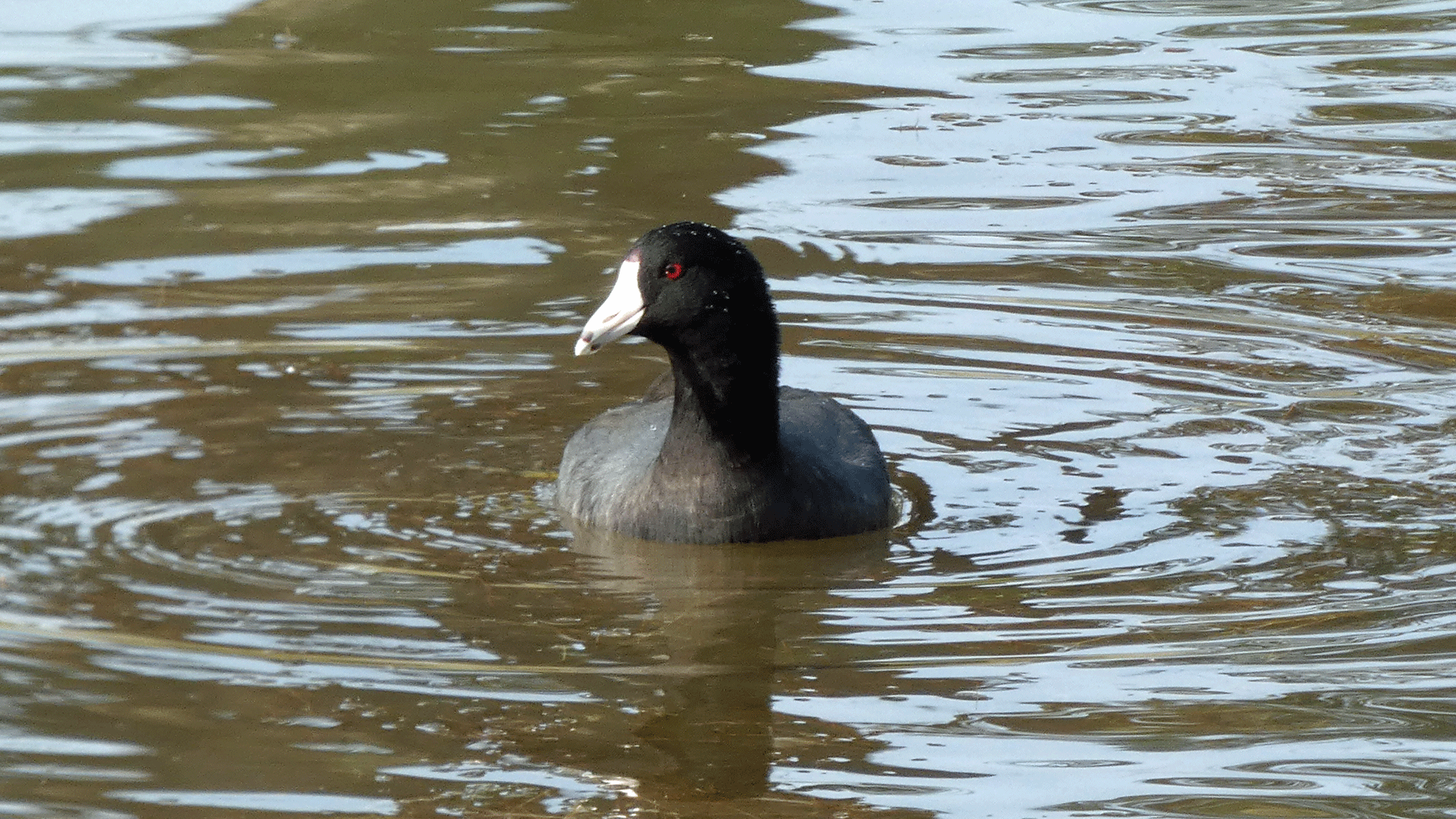
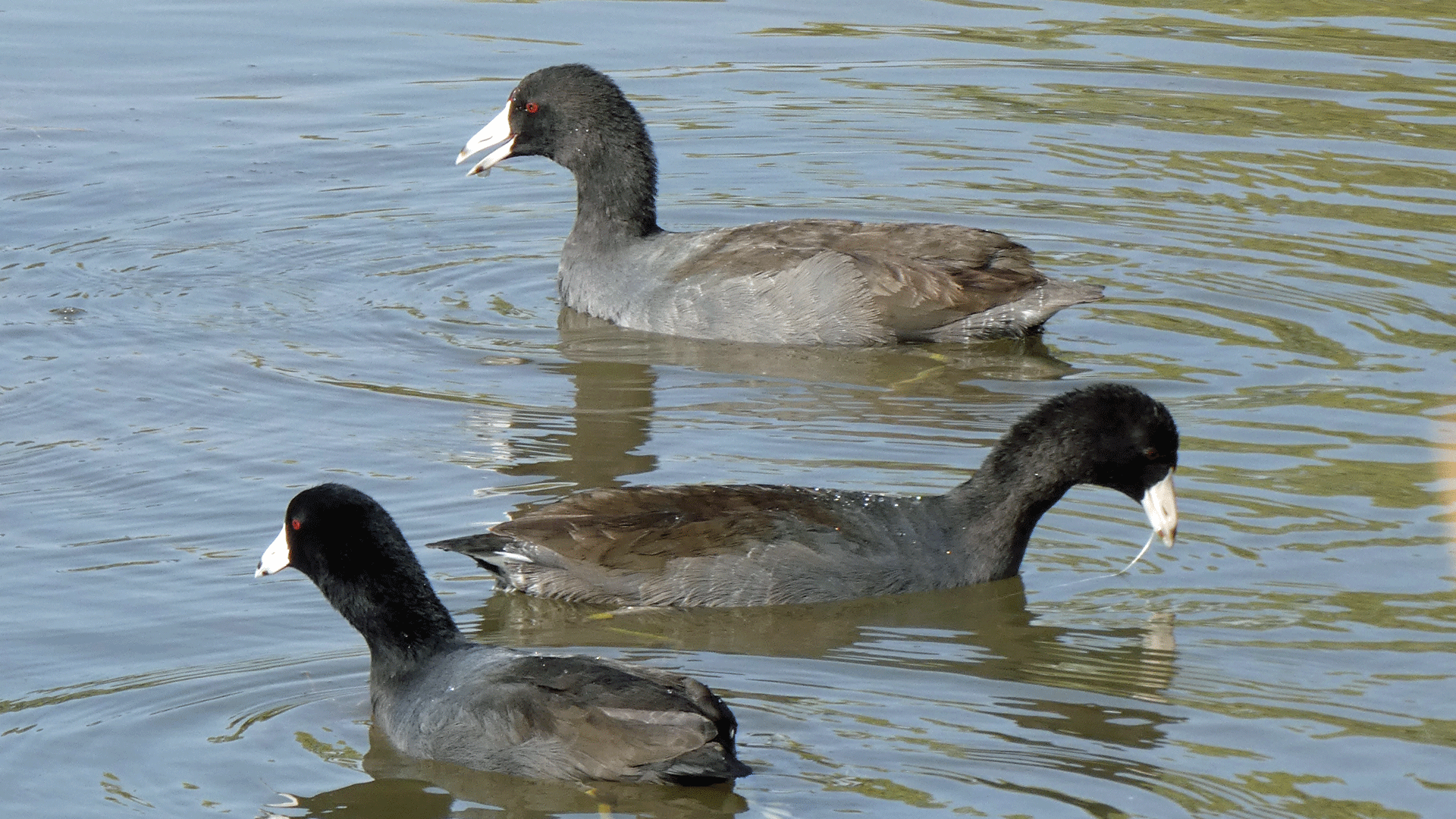




Although American coots are good swimmers, they don't have webbed feet. Instead they have flaps along each of their very large toes. The flaps bend back during the forward part of their swimming stroke, then spread during the back part of the stroke. American Coots use those superbly adapted feet to dive for aquatic plants, which they eat after bobbing back up. I have seen ducks hang close to diving coots, then attempt to steal the greens the coots brought to the surface.
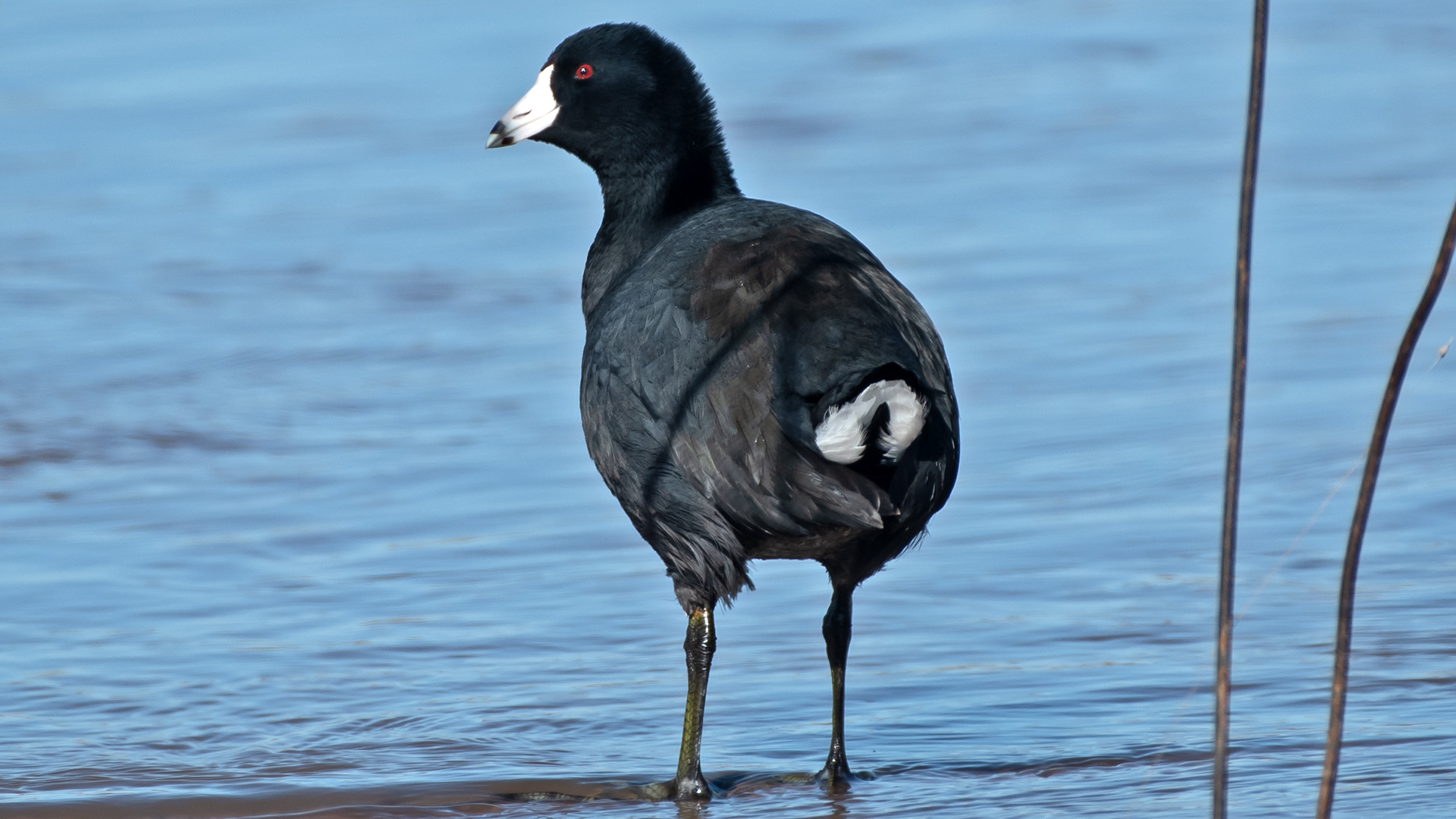
Normally the adults look all black, with white beaks. They do have white outer undertail coverts, but most of the time you won't see them. My November 2025 "butt shot" shows these white feathers.
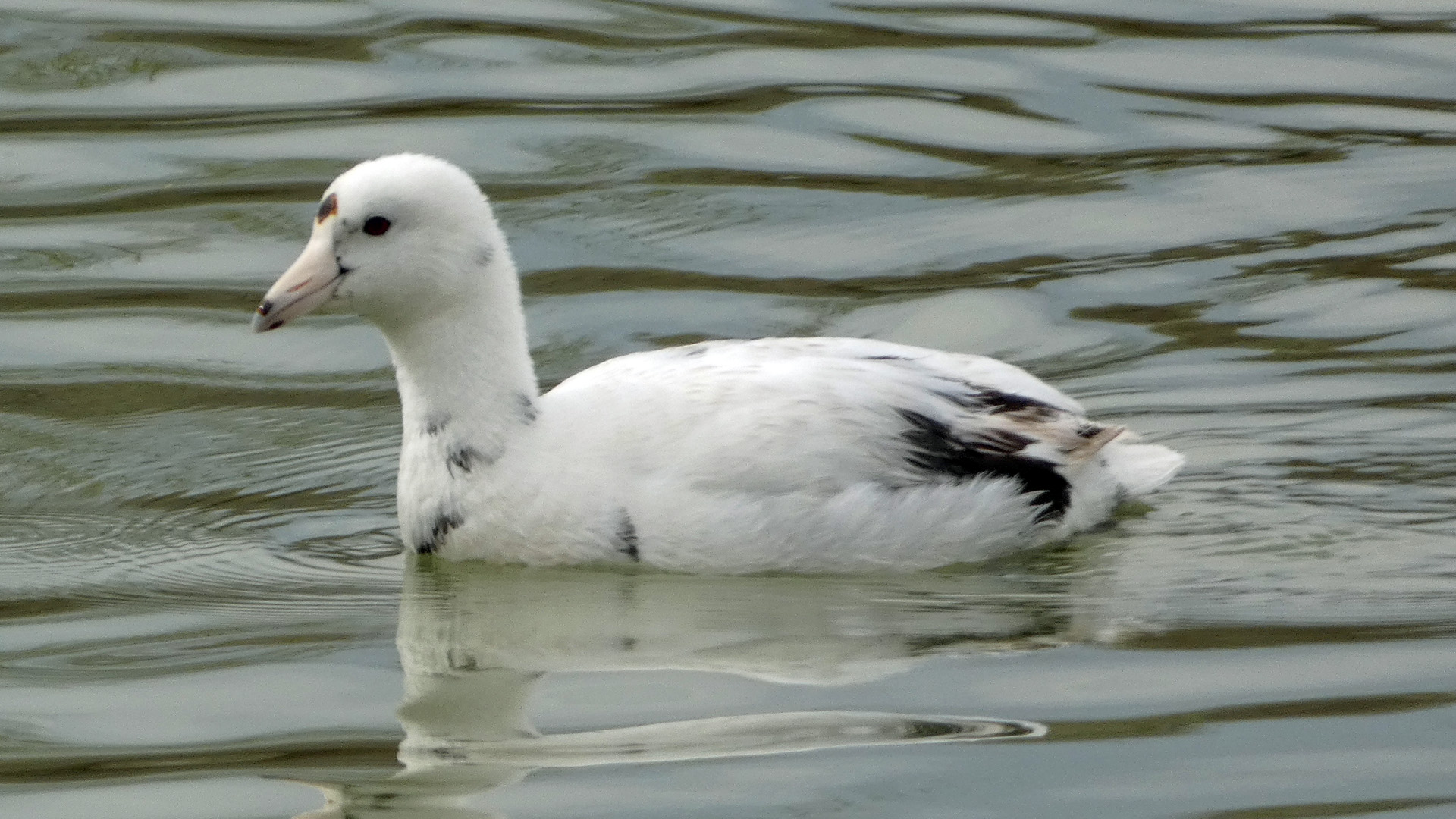
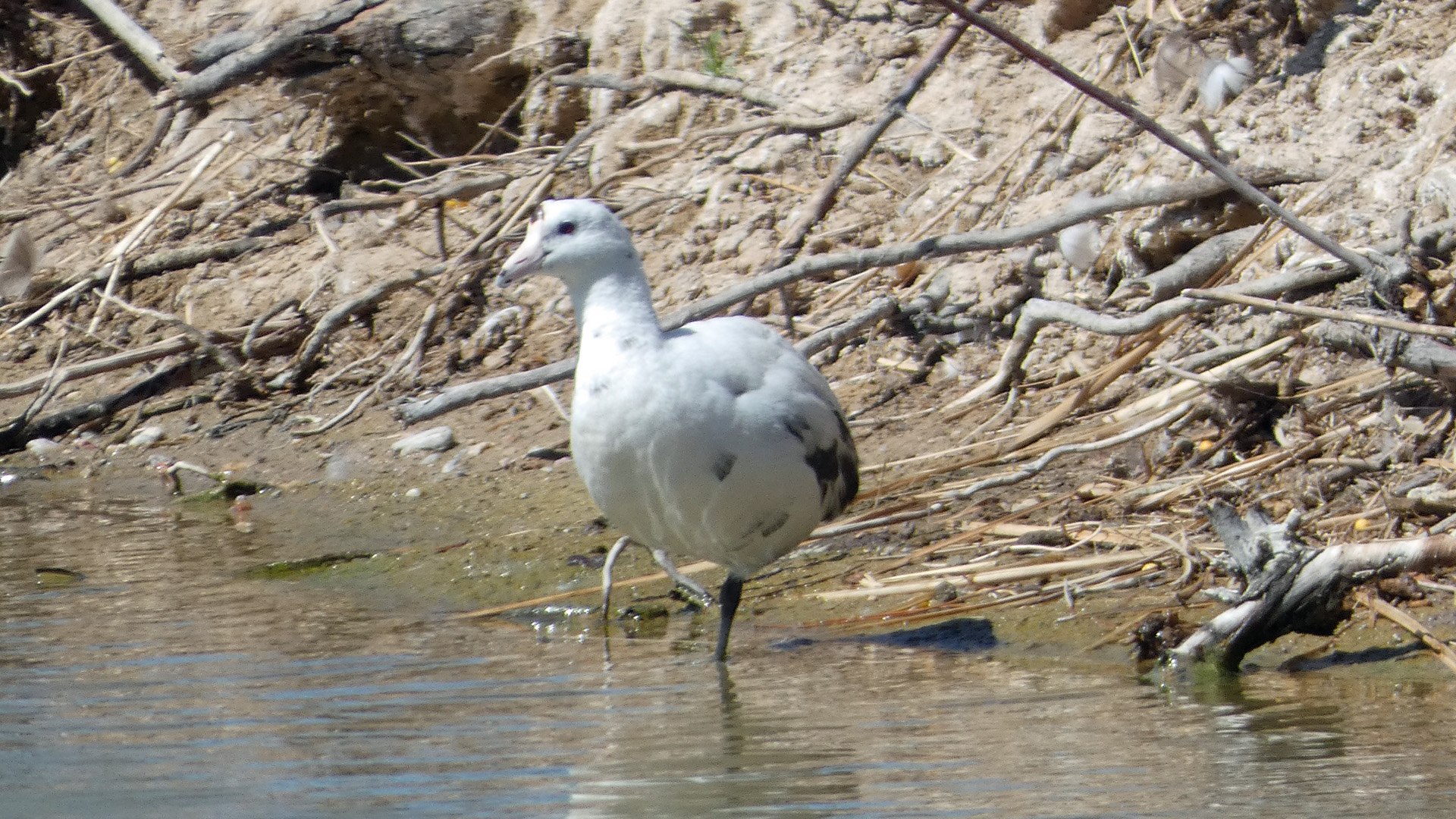
In Spring 2022 I saw a mostly white coot, which is shown below. Among animals, partial albinism is called leucism.


Rallidae: Sora (Porzana carolina)


Soras breed in much of New Mexico, but most people never see one. Usually, soras hide in the thick plant cover at wetlands, and birders identify them by their call rather than visually. Early one morning I was lucky enough to watch one bathe at the edge of a pond, then look for food on the muddy shoreline before disappearing into the reeds.